“No Food is Better Than Love, No Seasoning is Better Than Sincerity”
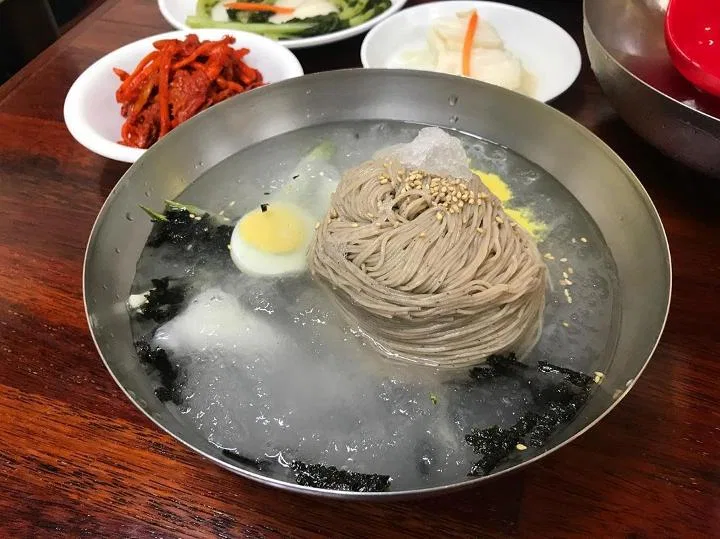
The house specialty is undoubtedly the Dongchimi Makguksu. The noodles are made solely from buckwheat, without any flour or starch. Since buckwheat contains little gluten, kneading and extruding the dough is difficult—most restaurants compromise by adding 20% flour or starch. Here, no shortcuts are taken.
Though the noodles can break easily, their soft, rustic texture releases a rich, nutty aroma with every bite. Considering the effort and cost of pure buckwheat, the prices remain reasonable. A banner in the shop reads, “No food is better than love, no seasoning is better than sincerity,” perfectly reflecting their philosophy.
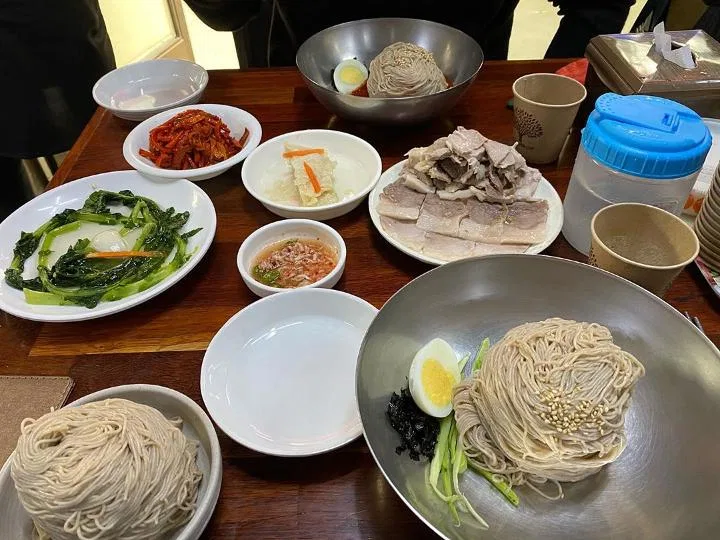
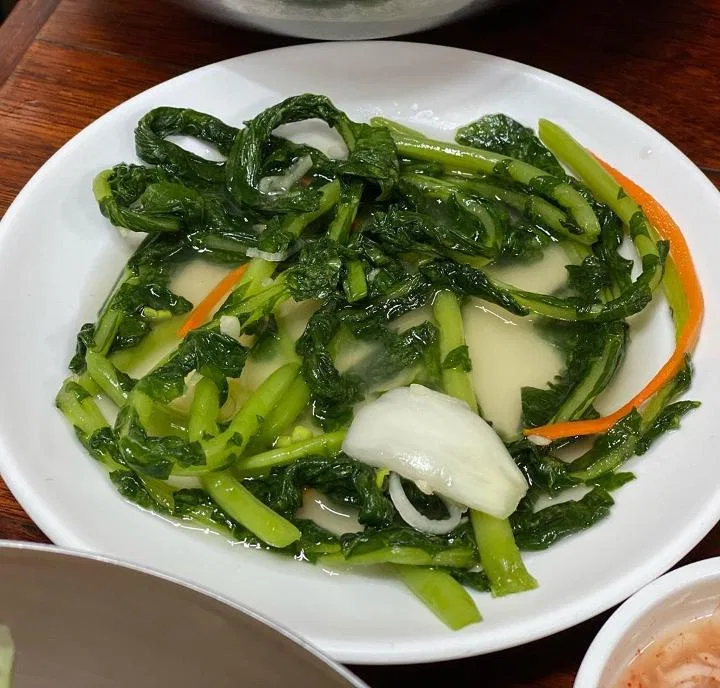
The presentation is simple: a bowl of noodles, a separate icy dongchimi broth, and sides of white kimchi, young radish kimchi, and spicy sashimi salad. Pour the broth over the noodles and mix. Don’t expect the sharp sweet-sour flavor of store-bought broth—the taste is gentle, balanced, and refreshing. A hint of spiciness, reportedly from chilies aged in plum extract, adds depth.
It’s a clean, subtle flavor—never overpowering, yet endlessly refreshing. At first-timers may find it mild, but the charm of traditional makguksu lies in its understated taste. No extra sauce is provided, encouraging diners to enjoy the pure harmony of noodles and broth. For variety, add some kimchi or sashimi salad toward the end for a flavor twist.
Balanced Simplicity: Bibim Makguksu
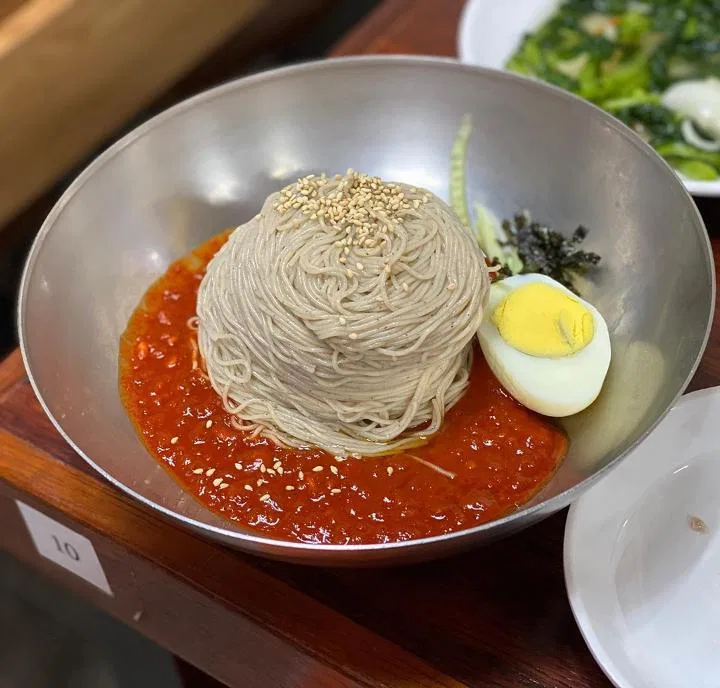
The Bibim Makguksu rivals the dongchimi version in popularity. Served with a spicy red sauce, it looks fiery but tastes clean and balanced. A ladle of dongchimi broth added to the mix enhances the flavor.
The seasoning doesn’t overwhelm; instead, it complements the nutty buckwheat noodles. Toppings are minimal—cucumber strips, half a boiled egg, and a sprinkle of seaweed—keeping the focus on the noodles. Beloved by regulars, it offers a spicier yet still delicate alternative to the cold broth noodles.
Pyeonyuk: The Perfect Companion
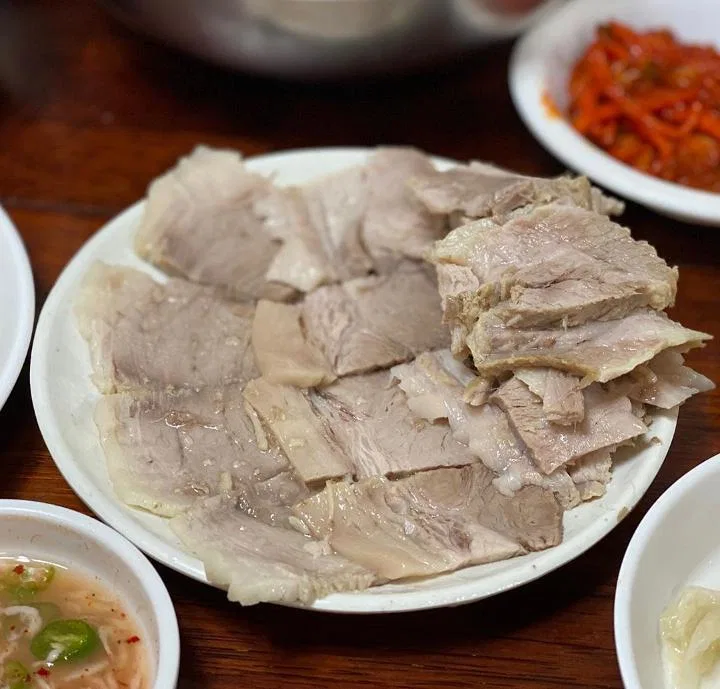
No meal here is complete without pyeonyuk (boiled pork slices). The meat is tender, juicy, and free of any gaminess. Generously portioned and fairly priced, it’s a favorite side dish.
The restaurant recommends the “three-flavor harmony”—pairing pork slices with spicy sashimi salad and crisp white kimchi. Together, they create a perfect balance of flavors, enhancing the makguksu experience with variety and richness.
A Bowl of Comfort
From the outside, Goseong Makguksu looks like a modest neighborhood eatery. Inside, however, it radiates warmth and authenticity. Despite gaining national fame and even TV features, owner Song Jeong-geun has stayed true to his roots, focusing on serving honest, traditional makguksu.
Watching the staff knead dough by hand, boil noodles fresh to order, and carefully ladle crystal-clear dongchimi broth reminds visitors of the sincerity behind each bowl. Without flashy signs or trendy interiors, the restaurant thrives on its pure flavors and human touch.
Here, diners discover what it means for a simple bowl of noodles to carry decades of tradition and heart. Thanks to its unwavering dedication, Goseong Makguksu brings the nostalgia and comfort of Gangwon-do’s culinary heritage to the heart of Seoul.
Restaurant Q&A
Q. What defines the taste of the Dongchimi Makguksu?
A. The gentle sweetness and tang of well-aged dongchimi broth blend seamlessly with the clean aftertaste of pure buckwheat noodles, creating a refreshing yet subtle flavor.
Q. How is the Bibim Makguksu different?
A. Despite its red sauce, it’s not overly spicy. The seasoning is clean and balanced, highlighting the buckwheat’s natural nuttiness.
Q. What pairs best with the noodles?
A. The boiled pork slices (pyeonyuk) are highly recommended. Combine them with sashimi salad and white kimchi for a special “three-flavor harmony.”
Quick Info
Name: Goseong Makguksu
Address: 6-7 Banghwadaro 49-gil, Gangseo-gu, Seoul
Siksin Star Rating: ★★★ (3 Stars)
Hours: Mon–Sat 11:30–20:00 (Break 15:30–16:40), Closed Sundays
Recommended Menu & Prices: Dongchimi Makguksu ₩11,000, Bibim Makguksu ₩12,000, Pyeonyuk (Large) ₩33,000
Review by Siksin user “Home-cooked Teacher Park”:
“Since they use nothing but buckwheat, the aroma really hits you with every bite. But be patient—because they make the noodles to order, it can take a little longer. This is the textbook version of refreshing dongchimi makguksu!”